VAPOR_SEPARATION
Distilling
The Spirit Extraction
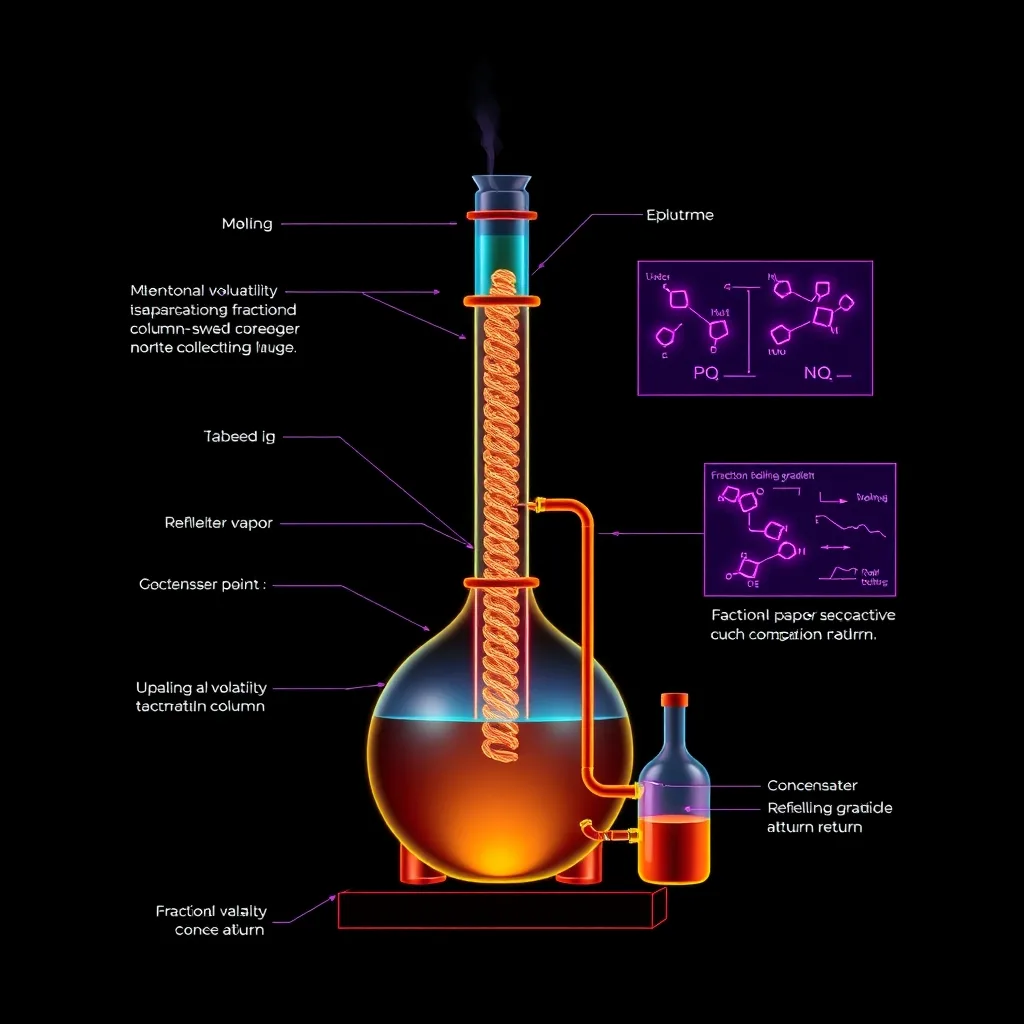
The literal alchemical act: matter boiled until its spirit rises, the vapor caught and condensed apart from its body. Separation by volatility — the oldest transmutation still practiced.
KINETIC_PROFILE
Voltage is tuned to the boiling point of the target fraction; the current is the vapor column itself, ascending, refluxing, and surrendering its cargo to the condenser. Each pass purifies.
P_total = Σ xᵢ · Pᵢ°Vapor composition is enriched in the more volatile component — the principle every still exploits.
ELEMENTAL_SIGNATURE
This transmutation leans fire.
ASTROLOGICAL_RULERSHIP
MOLECULAR_INTERACTION
Fractional Volatility Separation
Methanol foreshots rise first, ethanol hearts follow, fusel tails lag behind — the column sorts molecules by boiling point, and the distiller's blade falls between fractions.
Congener Concentration
Esters and aldehydes hitchhike with the hearts in trace amounts, carrying the source material's signature through the phase change. Spirit without congeners is mere solvent.
THERMAL_ENVELOPE
Component-specific boiling/condensation windows; ethanol-water systems center around 173°F+.
PRAXIS
BENEFITS
- Creates concentrated extracts with medicinal properties
- Removes impurities from volatile compounds
- Preserves delicate aromas that might be lost in other extraction methods
SUITABLE_SUBSTRATES
INSTRUMENTS
- Still (pot still or column still)
- Condenser
- Collection vessel
- Heat source
- Thermometer
- Cooling system
- Hydrometer (for measuring alcohol content)
OPTIMAL_TEMPERATURES
ARCHIVES
HISTORICAL_RECORD
Distillation has ancient origins, with evidence of the technique dating back to at least 3000 BCE in Mesopotamia. It was further developed by alchemists and has been crucial in perfumery, medicine, and spirits production throughout history.